

CASE STUDY OF COMMON DEFECTS AT SITE
DATE: DECEMBER 2022
PREPARED BY: BALWINDER SINGH, ASST. BUSINESS MANAGER Kataline Limited.
LOCATION: MULTIPLE LOCATIONS - NORTH INDIA
OBSERVATION:
Pinholes
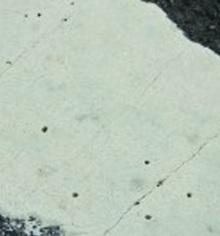
Problem and Observation: Small holes observed on the surface of thermoplastic line marking after application.
Causes: Evaporation and expansion of the moisture on the surface.
Preventive Measures:
- Do not apply thermoplastic immediately after rain or under dew conditions.
- Allow time for the road surface to dry completely.
- Ensure marking is done after a minimum of 75 days of finish coat of Bitumen / Concrete surface.
- Let primer dry completely before application.
- Gradually increase the temperature of thermoplastic and avoid overheating.
Blackening of Road Marking
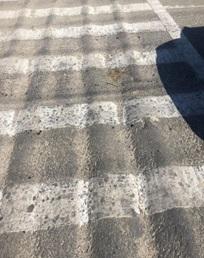
Problem and Observation: Surface of thermoplastic line marking becomes black.
Causes:
- Vehicle tires transfer dust and carbon deposited on the tire surface onto fresh marking.
- Vehicle tires transfer freshly laid Bitumen onto the surface.
- Bleeding of Bitumen due to insufficient curing.
Preventive Measures:
- Allow for Bitumen to cure for a minimum of 75 - 90 days before applying thermoplastic road marking.
- Allow vehicles to transverse on road after a minimum of 2 hrs / required curing time of thermoplastic.
Remarks: Generally, temporary blackening due to carbon/dust can be washed with potable water.
Cracks
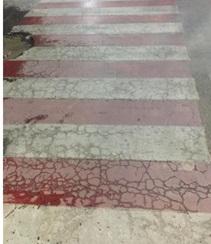
Problem and Observation: Cracks on the surface of road marking.
Causes:
- Thermoplastic is too hard or does not exhibit expansion and contraction under natural weather conditions.
- Uneven thickness leading to different hardening speeds of the thermoplastic.
- Improper surface conditions.
Preventive Measures:
- Cold season with a big variation in temperature between day and night contributes more to this problem.
- Adjust the laying shoe of the applicator.
- Always ensure proper curing of concrete or asphalt surface has been done.
- Remove the existing road marking prior to application of new road marking.
Remarks: Thermoplastic road marking over 2-component cold plastic road marking should be avoided or vice-versa.